Autism, Identity, and Intersectionality: A Guide for Autistic Adults
Part of the Embrace Autism Resource Series
Summary
After discovering you are autistic, you will likely begin to ask deep questions about who you really are. For many autistic adults, this realisation marks the beginning of reconnecting with their true self – sometimes for the first time.
This autistic-designed guide explores identity, language, and intersectionality, which recognises that our experiences of being autistic are shaped by other parts of who we are. You will also hear personal reflections and find additional resources created by others within the autistic community.
Whether you are formally diagnosed or self-identified autistic, your identity is valid, You belong here.
Guide Menu
On this page
-
- Introduction
- Realising You Are Autistic Can Change How You See Yourself
- There Is No One Way To Be Autistic
- Language and Identity: Choosing Words That Feel Right To You
- What is Intersectionality?
- You Don’t Have to Navigate This Alone
- Building A Positive Autistic Identity
- Embracing Your Autism
- Further Resources and Support
- Watch the Embrace Autism Video: Identity and Intersectionality
- Get in Touch
1. Introduction
This guide explores identity and intersectionality through a neuro-affirming lens. It is based on a video in the Embrace Autism series, created by Autistic Knowledge Development.
The Embrace Autism programme supports autistic adults in Scotland who are exploring their identity after learning they are autistic.
2. Realising You Are Autistic Can Change How You See Yourself
“Who Am I really?”
After learning that you are autistic, it is common to start asking questions about your identity. Many people reflect on their life and wonder, “Who am I, really?”
This can be the start of a processing of reconnecting with your authentic self – the version of you that existed before you were taught to mask and change parts of yourself to fit into the world around you.
The process of unmasking your autism might bring up feelings of grief, confusion, curiosity, or even joy. All of those feelings are valid.
You don’t need to have all the answers straight away.
3. There Is No One Way To Be Autistic
Autistic people are as varied and unique as any other group of people. We have different personalities, preferences, life experiences, communication styles, and ways of moving through the world.
You do not need to be like other autistic people to be valid. If you hear someone describe their experience and it feels different to your own, that is okay. You still belong in autistic spaces.
You are allowed to be exactly who you are.
Autistic Person A |
Autistic Person B |
| Highly sensitive to sound | Seeks out loud noise |
| Speaks passionately and at length | Prefers not to speak at all |
| Highly organised | Struggles with executive functioning |
| Speaks in monotone | Very expressive |
4. Language and Identity: Choosing Words That Feel Right To You
There is no “right” answer – just what feels right for you
Language matters – and it is okay if you are still figuring out what feels right for you.
Many people in the autistic community prefer identity-first language, such as “autistic person,” because being autistic is not separate from who they are. It is not something they have – it is something they are.
Others may choose person-first language, such as “person with autism,” especially if that feels right for them personally or in certain settings.
Identity-First Language |
Person-First Language |
“Autistic person” |
“Person with autism” |
| Emphasises identity | Emphasises individual |
| General preference within autistic community | Commonly used in medical settings |
There is no single “correct” way to talk about being autistic. You are allowed to use whatever language feels most comfortable to you.
It’s also okay if the language you prefer changes over time.
5. What is Intersectionality?
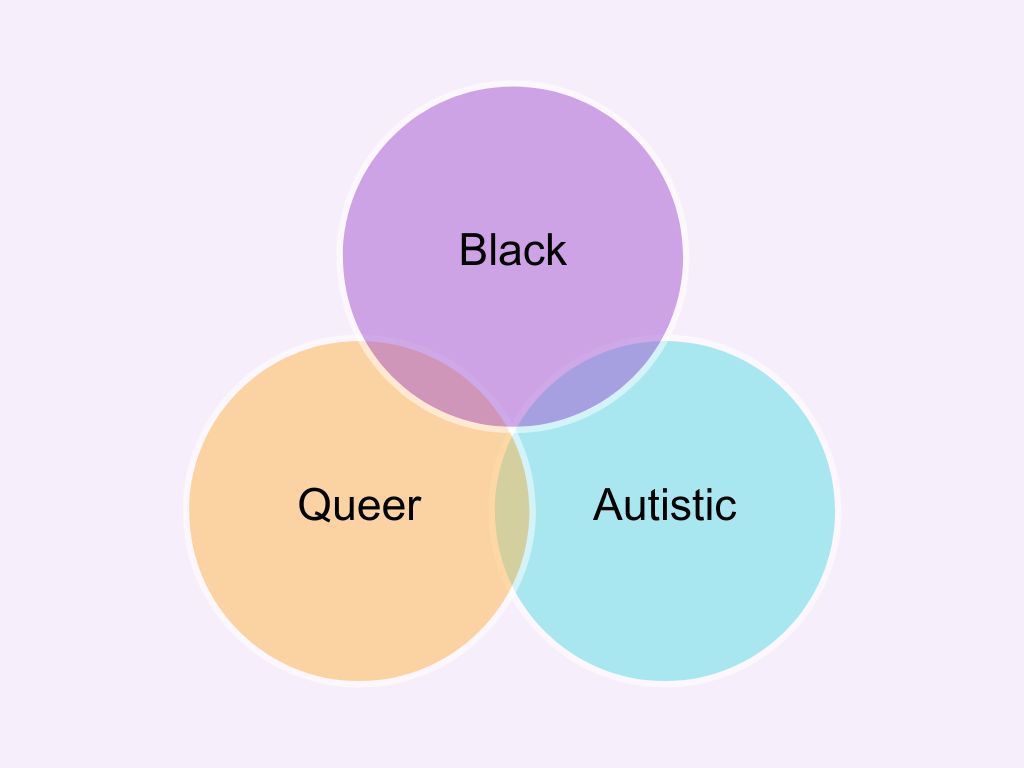
Intersectionality is a word used to describe how different parts of your identity come together and affect your experiences in the world.Examples of intersectionality:
-
- Autistic and ADHD
- Autistic and Black
- Autistic and a woman
- Autistic and part of the LGBTQ+ community
- Autistic and working class
All of these parts of you shape how you are treated by others, how you see yourself, and what barriers you might face.
Your intersectionality can also help you find deep connection with people who share your experiences.
7. Building A Positive Autistic Identity
Reflecting on your identity can bring up memories and feelings from the past. You might start to see your life differently now that you understand yourself through an autistic lens.
This journey might involve:
-
- Relearning who you are
- Letting go of the pressure to mask or perform
- Practicing self-compassion
- Meeting others who share your experiences
Some people describe this as finally feeling “normal” in a room, often for the first time.
There is something powerful about being around others who get it – who do not need you to explain or justify yourself.
8. Embracing Your Autism
Some people wonder if they would choose to stop being autistic if they could. For many, the answer is no.Being autistic might come with challenges, but it is also deeply connected to who we are, how we experience the world, and what we bring to it.
Your autistic identity is something to embrace – not something to fix.9. Further Resources and Support
Embrace Autism Peer-Support Groups
Embrace Autism is an autistic-led programme designed and delivered by Autistic Knowledge Development. We provide pre- and post-diagnostic support to autistic adults in Scotland.
As part of the programme of support, we deliver an online series of six group sessions, where up to 12 autistic adults can share experiences and strategies. The groups also aims to connect autistic adults, creating peer-support networks that will last beyond the completion of the programme.
SWAN (Scottish Women's Autistic Network
10. Watch the Embrace Autism Video: Identity and Intersetionality